AI for Restaurant Private Dining & Catering: Never Miss a Booking
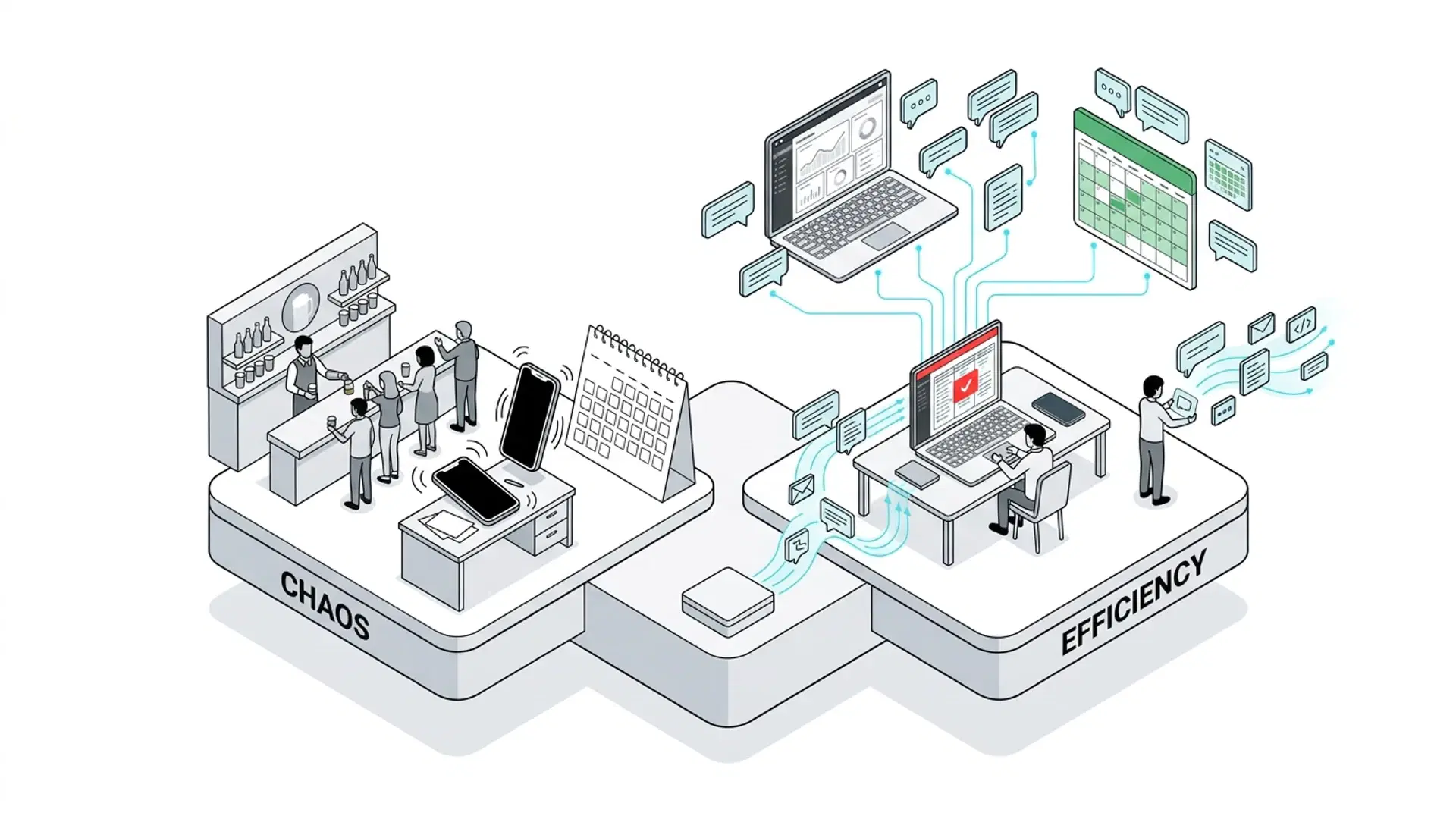
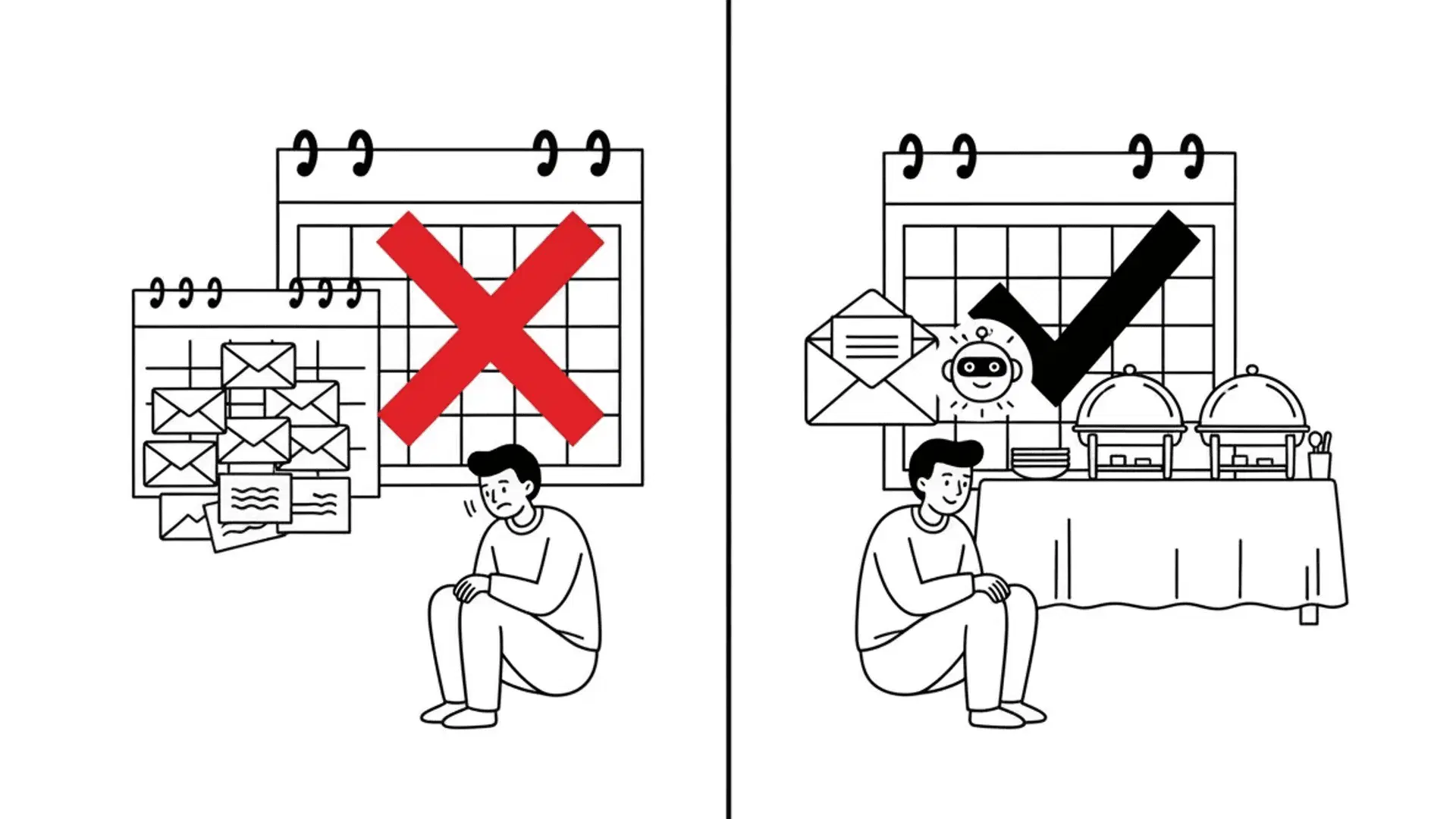
A corporate admin emails three restaurants about a 40-person holiday dinner. One replies in 4 minutes with a custom menu and available dates. Yours replies Thursday. Here's how to stop losing private dining revenue to your inbox.

AI for Restaurant Private Dining & Catering: Never Miss a Booking
TL;DR: What You'll Learn
- The revenue you're leaving on the table: A single private dining booking is worth $3,000-15,000. Your restaurant misses 30-40% of these inquiries because they arrive during service, on weekends, or through channels nobody's monitoring.
- The 4-channel breakdown: Where private dining leads actually come from - and which channel has the worst response rate.
- The Private Dining Response Checklist: The 7 details you need in every first reply to convert an inquiry into a signed contract.
- When to automate vs. when to pick up the phone - a decision matrix based on event size and lead source.
The $8,000 Email Sitting in Your Inbox Right Now
Private dining is the highest-margin revenue line on most restaurant P&Ls. Here's what a typical private event is worth:
| Event Type | Avg. Guests | Per-Person Spend | Total Revenue |
|---|---|---|---|
| Corporate dinner | 30 | $125 | $3,750 |
| Rehearsal dinner | 45 | $95 | $4,275 |
| Holiday party | 60 | $110 | $6,600 |
| Full buyout | 120 | $85 | $10,200 |
| Birthday/milestone | 25 | $90 | $2,250 |
These aren't hypothetical. A restaurant doing 3-4 private events per month at an average of $5,000 generates $180,000-240,000 annually from private dining alone. Some restaurants with dedicated private rooms do double that.
Now here's the problem: most restaurants respond to private dining inquiries the same way they respond to an OpenTable review - whenever someone gets around to it.
The data is ugly. The average business takes 42 hours to respond to a web-submitted lead. For restaurants, it's often worse - private dining emails land during prep, service, or close. A Friday afternoon inquiry about a December holiday party sits unread until Monday. By then, the organizer has deposits down at two other venues.
Responding within 5 minutes makes you 21x more likely to qualify a lead. For private dining, "qualify" means getting the organizer on a tasting call or site visit before they commit elsewhere.
Where Private Dining Leads Actually Come From (And Where They Die)
Most restaurant owners think private dining leads are phone calls. They're not. Here's the actual channel breakdown for private dining inquiries at a typical full-service restaurant:
Website contact forms and private dining inquiry pages: 40% This is your biggest source - and your leakiest. These forms get submitted at all hours. The organizer fills out guest count, preferred date, and budget, then waits. And waits. Most restaurants don't have anyone monitoring the form inbox in real time. Response rates within 1 hour: under 30%.
Direct email: 25% Corporate admins and wedding planners email directly. These often go to a general info@ address or the GM's inbox, where they compete with vendor invoices, scheduling requests, and Sysco confirmations. Easy to miss, easy to delay.
Phone calls: 20% The calls that do come in happen during service (when nobody answers) or during prep (when the person answering doesn't have private dining details handy). 25-30% of restaurant calls go to voicemail. 80% of those callers won't leave a message - they'll call the next restaurant on their list.
Third-party platforms and referrals: 15% Event platforms like Peerspace, Eventective, and direct referrals from planners and hotels. These leads are high-intent but often arrive as form submissions that get buried.
The Response Time Problem, Visualized
| Channel | Avg. Response Time | Lead Survival Rate |
|---|---|---|
| Website form | 18-48 hours | ~35% still available |
| 12-24 hours | ~45% still available | |
| Phone (answered) | Immediate | ~90% still available |
| Phone (voicemail) | 4-24 hours | ~20% still available |
| Platform referral | 24-72 hours | ~25% still available |
"Lead survival rate" = the percentage of organizers who haven't already committed to another venue by the time you respond. It's not scientific, but it's directional - and the direction is clear.
The Private Dining Response Checklist: 7 Details That Close
Speed matters. But a fast reply that says "Thanks for your inquiry, someone will be in touch" converts almost nothing. The organizers booking $5,000-10,000 private events need specific information to make a decision.
Every first response to a private dining inquiry should include these 7 elements:
1. Confirmation of availability
"We have our private dining room available on both December 12th and 14th for your group of 40." Don't say "let me check" - check before replying or have a system that checks automatically.
2. Room or space details
Capacity, layout (seated vs. standing), AV capabilities, any restrictions. Attach a photo or floor plan if you have one.
3. Menu options with pricing
Send 2-3 menu tier options with per-person pricing. Don't say "we can customize" without giving them a starting point. Organizers need a number to put in their budget approval.
4. Beverage package options
Open bar, limited bar, wine pairings, per-consumption. Include price ranges. This is often 30-40% of the total bill and organizers need it for budget approval.
5. Minimums and fees
Room rental fee, food & beverage minimums, service charges, tax. No surprises. Corporate planners will disqualify you immediately if fees appear later.
6. Timing and logistics
Setup time, event duration limits, parking information, load-in for AV or decorations. Practical details signal professionalism.
7. A specific next step
"Would you like to schedule a tasting for next Tuesday or Thursday at 2 PM?" Not "let us know if you have questions." Give them two time slots and a clear action.
Template: Private Dining First Response
Subject: [Restaurant Name] - Private Dining Available [Date]

Hi [Name],

Thank you for considering [Restaurant Name] for your [event type].

Great news - our [room name] is available on [date(s)]. The space
seats up to [X] guests for a seated dinner with [features: AV,
private bar, dedicated entrance].

For a group of [X], here are our most popular options:

- [Menu Tier 1]: $[X]/person (includes [details])
- [Menu Tier 2]: $[X]/person (includes [details])
- Beverage packages from $[X]-$[X]/person

Our private dining minimum is $[X]. Service charge is [X]%
and tax is [X]%.

I'd love to walk you through the space and do a tasting.
Are you available [Day 1] or [Day 2] at [time]?

[Name]
[Title]
[Restaurant] | [Phone]
This template works because it answers every question an organizer has before they ask it. Most competitors send a two-line "thanks, we'll be in touch" response. You're sending a near-complete proposal.
The Decision Matrix: What to Automate vs. What to Handle Personally
Not every private dining inquiry needs the same treatment. Here's how to decide:
Automate fully (AI Sales Assistant handles end-to-end):
- Event size: Under 20 guests
- Lead source: Website form, email
- Event type: Birthday dinner, small celebration, casual corporate
- Why: These are high-volume, moderate-value. Speed matters more than personal touch. An AI Sales Assistant like Mikla can respond in under 5 minutes with availability, menu options, and a booking link.
Automate first response, then hand off:
- Event size: 20-60 guests
- Lead source: Any channel
- Event type: Corporate dinner, rehearsal dinner, holiday party
- Why: The fast acknowledgment with details (automated) keeps you in the running. Then your events coordinator follows up personally for menu customization and tasting scheduling.
Personal response only:
- Event size: 60+ guests or full buyout
- Lead source: Planner referral, direct outreach
- Event type: Wedding reception, large corporate, multi-day event
- Why: These are $10,000+ bookings. The organizer expects a personal call. But even here, an AI assistant can answer the initial inquiry within minutes and schedule a callback, so the lead doesn't go cold overnight.
The Speed vs. Personal Touch Grid
| Small Event (<20) | Medium Event (20-60) | Large Event (60+) | |
|---|---|---|---|
| During business hours | Automate | Auto-respond + handoff | Auto-respond + immediate callback |
| After hours / weekends | Automate | Automate | Auto-respond + next-day callback |
| During service | Automate | Automate | Auto-respond + post-service callback |
The pattern: automate the first touch, always. A 4-minute automated response with real details beats a 4-hour personal response every time. The organizer doesn't care who sends the first email. They care that they get the information they need before their boss asks for a status update.
The Channels You're Probably Ignoring
Most restaurants focus private dining marketing on their website. But three channels are growing fast and most restaurants aren't capturing leads from them:
Google Business Profile: When someone searches "private dining near me" or "restaurant with private room [city]", your GBP listing shows up. If they click "call" during service and nobody answers, that lead is gone. If they click "website" and your private dining page doesn't have a form, that lead is gone.
Instagram DMs: Restaurants with strong Instagram presences get private dining inquiries in DMs. "Do you do private events? We're looking for a space for 30 people in March." These sit unread for days because nobody's monitoring the DM inbox during service.
Catering inquiries disguised as regular requests: "Can you do off-site catering for 50 people?" arrives as a general contact form submission and gets treated like a reservation request. A $4,000 catering lead gets a response meant for a 2-top asking about parking.
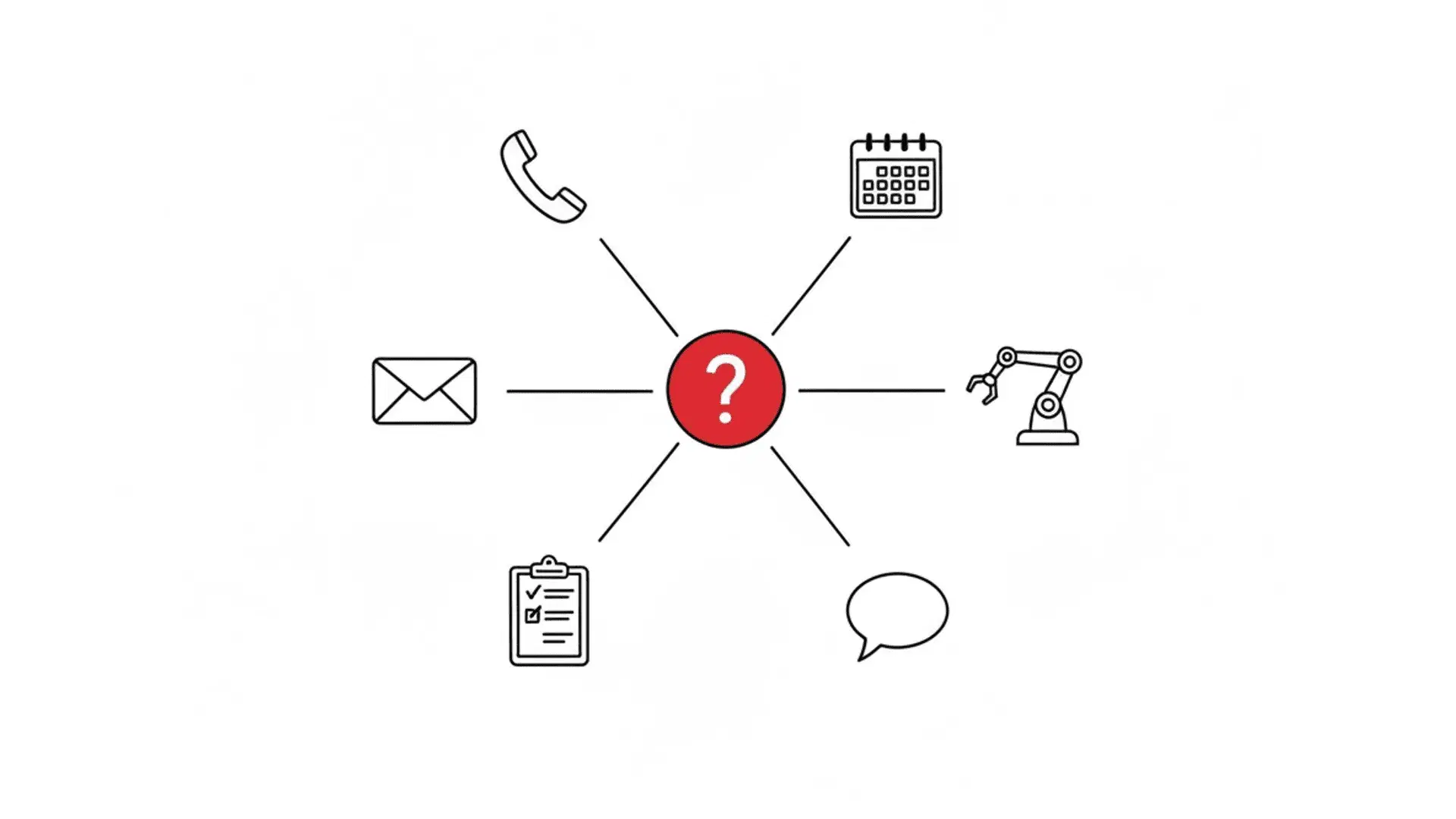
A multi-channel AI Sales Assistant captures leads from all of these sources - website forms, email, phone, and social - and routes private dining inquiries to the right response flow with the right information.
What Mikla actually does for restaurants
Mikla is an AI Sales Assistant (sometimes called an AI receptionist) built for venues and hospitality businesses. Here is what it handles for restaurants specifically:
- Every channel, one brain. Replies on email, SMS, voice calls, website chat, Instagram and Facebook DMs, WhatsApp, and marketplace lead forms (The Knot, WeddingWire, Hitched, Zola). Same memory across all of them, so a couple emailing Monday and texting Friday is treated as one conversation.
- Books directly on your calendar. Handles appointment booking, reschedules, and cancels on Google Calendar or Outlook. Reads conflicts across your main calendar, Calendly, and any reserved sub-calendars before offering times. Handles in-person and virtual tours and generates Google Meet links automatically.
- Trained from your own documents. Upload your pricing sheets, contracts, and policies. Mikla trains itself in 2 to 5 minutes. Quick-edit the knowledge base in plain English ("change Friday hours to 6-11pm") with auto-rollback on failure. Refuses to fabricate pricing or capacity it does not know.
- Per-event-type configuration. Run weddings, corporate events, and private celebrations side by side, each with its own qualification questions, knowledge base, signature, follow-up cadence, and CTA. Add a new event type without writing code.
- Multi-stage follow-up automation. Email and SMS sequences across pre-tour, post-tour, and post-contract-sent stages. Auto-stops the moment a lead replies, books, or opts out. Detects natural opt-outs ("please stop"), not just STOP keywords. Respects quiet hours and your timezone.
- Built-in sales Kanban. Every lead moves through stages: new, qualified, tour booked, tour completed, contract sent, signed, lost. Conversations, qualification answers, calendar bookings, and follow-up history all live on the same lead. No separate CRM needed.
- Contracts and payments in the same flow. Once a booking is confirmed, Mikla fills your own contract template with the names, dates, and totals (your wording, never invented), sends it for built-in e-signature, and collects the deposit or payment schedule through Stripe. Signature and balance reminders run until it is signed and paid, then stop.
- 24/7 voice agent. Picks up calls in a natural human voice. Qualifies leads, answers questions, books tours, transfers to your team when appropriate. Full transcripts saved.
- Recognizes returning customers. Detects repeat inquirers and existing clients automatically. Marketplace leads parsed so couples are never re-asked for info they already filled in.
FAQ: Restaurant Private Dining Lead Management
How many private dining inquiries does a typical restaurant miss? Based on industry data, restaurants miss 25-30% of phone calls outright, and 23% of web/email inquiries never get a response at all. During peak service hours (5-10 PM), the miss rate climbs higher. For a restaurant getting 15-20 private dining inquiries per month, that's 5-8 potential bookings lost.
What's the ideal response time for a private dining inquiry? Under 5 minutes for an initial response with details. Research shows responding within 5 minutes makes you 21x more likely to qualify the lead versus waiting 30 minutes. For private dining specifically, corporate organizers often submit inquiries to 3-5 restaurants simultaneously. The first one to respond with availability, pricing, and a tasting invitation wins the site visit.
Should I use a separate phone number for private dining inquiries? Yes. A dedicated events line (or a forwarded line to an AI Sales Assistant) ensures private dining calls get specialized handling - availability checks, menu information, tasting scheduling - instead of competing with reservation calls and delivery questions.
How do I handle private dining inquiries during service? This is the core problem. You can't pull your GM off the floor to respond to emails during a Friday dinner rush. The two proven approaches: (1) automate first responses so inquiries get immediate replies with real details, or (2) hire a dedicated events coordinator. Option 1 costs $149/month. Option 2 costs $45,000-55,000/year.
Your Next Move
If you're a restaurant doing any private dining or catering, run this quick audit:
- Submit a test inquiry through your own website contact form at 8 PM on a Friday. Time how long it takes to get a response.
- Call your own restaurant during service and ask about private dining availability. Note whether the person who answers can give you pricing, capacity, and available dates.
- Check your general email inbox for any private dining inquiries from the last 30 days that took longer than 24 hours to get a response.
If any of those tests reveal gaps, you're losing revenue. Every week of delay is another $3,000-10,000 booking that goes to the restaurant down the street.
Ready to see how Mikla handles your inquiries?
Book a 15-minute demo and we will connect Mikla to a test inbox of yours, upload your pricing sheet, and show you the AI replying to a sample inquiry in real time. No commitment, no card required.
Never miss another lead with Mikla's 24/7 AI sales agent.