Corporate Event Venue Inquiry Management: The AI Playbook
Corporate planners contact 3-5 venues, build a shortlist within 48 hours, and book with whoever provides capacity, pricing, and availability first. Here's how to make that shortlist every time.

Corporate Event Venue Inquiry Management: The AI Playbook
Corporate events are the most underworked revenue stream in hospitality. They're high-value, they repeat annually, and the planner who books your venue this year will likely come back next year. But corporate planners operate on tight deadlines - and the venue that can't provide capacity, pricing, and availability within hours doesn't make the shortlist.
TL;DR: What You'll Learn
- What corporate event leads are worth: $5,000 for a team dinner to $100,000+ for a multi-day conference. Unlike weddings, corporate bookings repeat year after year.
- How corporate planners actually choose venues: They contact 3-5 options, build a shortlist within 48 hours, and present 2-3 finalists to a decision committee. If you respond in 24 hours, you're already eliminated.
- The 6 corporate event types your venue should target and which venue types win each one.
- A response playbook with the exact qualification questions and template that gets you on the shortlist.
What Corporate Event Leads Are Actually Worth
Corporate events aren't just bigger checks. They're recurring revenue with built-in referral networks. Here's what one booking is worth across different venue types:
| Event Type | Typical Revenue | Repeat Rate | Venue Types |
|---|---|---|---|
| Corporate meetings & training | $5,000-25,000 | 75% annual | Hotels, conference centers |
| Corporate retreats & offsites | $10,000-50,000 | 60% annual | Resorts, farms, wineries |
| Team building events | $3,000-15,000 | 70% annual | Farms, wineries, golf clubs |
| Holiday & year-end parties | $8,000-30,000 | 80% annual | Hotels, restaurants, rooftop venues |
| Charity golf tournaments | $10,000-40,000 | 85% annual | Golf clubs |
| Product launches & galas | $15,000-75,000 | 40% | Hotels, museums, rooftop venues |
Notice the repeat rates. A hotel that hosts a company's annual sales kickoff at $25,000/year has a $125,000 five-year client. A golf club that lands a charity tournament at $30,000/year just added $150,000 in lifetime value from a single inquiry. A farm venue that hosts a company's annual retreat becomes a standing booking.
Compare that to a wedding - beautiful, meaningful, but one-and-done. Corporate events are the closest thing to subscription revenue a venue can get.
How Corporate Planners Actually Choose Venues
Understanding the planner's process explains why most venues lose before they even respond.
The typical corporate event booking timeline:
-
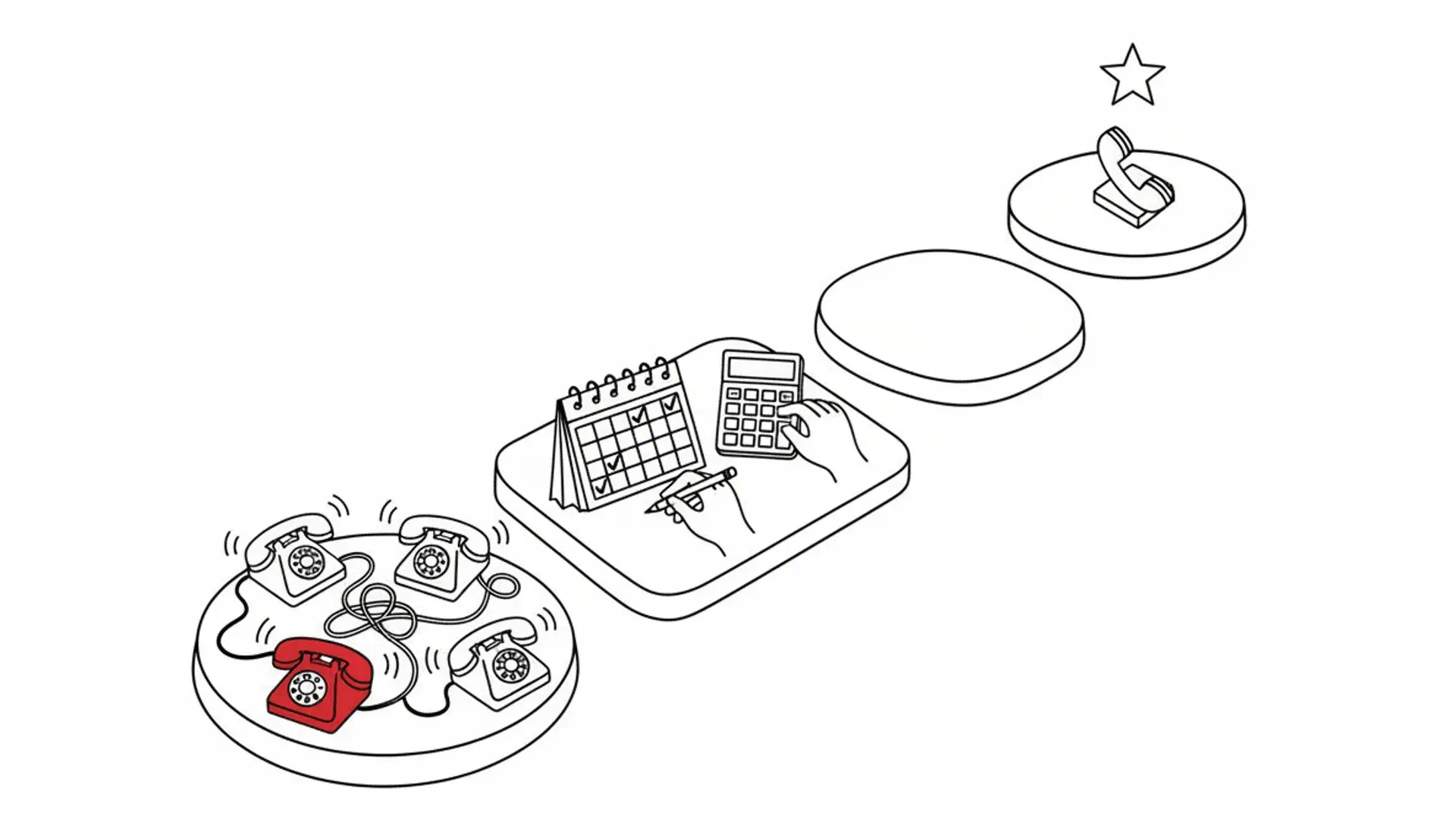
Day 1-2: Research and outreach. The planner (often an executive assistant, HR director, or event coordinator) identifies 3-5 venues through Google, venue directories, colleague recommendations, and past experience. They send inquiries via email or web form - almost never by phone first.
-
Day 2-3: Build the shortlist. Within 48 hours, the planner needs to present 2-3 venue options to a decision-maker (VP, department head, or C-suite). Each option needs: capacity confirmation, estimated pricing, available dates, and key logistics (AV, catering, parking). Venues that haven't responded by this point are eliminated.
-
Day 3-7: Site visits and final selection. The shortlisted venues get site tours. The planner is comparing responsiveness, flexibility, and professionalism. The venue that was fastest and most thorough in Step 2 has a significant advantage.
-
Day 7-14: Contract and deposit. Decision is made, contract is signed.
The critical window is Day 1-2. If your venue takes 24 hours to reply to a corporate inquiry, the planner already has 2-3 competing venues with complete proposals. You're not late - you're invisible.
Research confirms this: responding within 5 minutes makes you 21x more likely to qualify the lead. Corporate planners are even less patient than couples because they're on a work deadline, not a personal timeline.
The 6 Corporate Event Types (and Which Venues Win Each)
Corporate event planners search by event type, not venue category. Here's what they need for each - and which venues are best positioned.
1. Meetings, Conferences & Training Sessions
What planners need: Meeting rooms for 20-500, AV equipment, breakout spaces, catering, Wi-Fi bandwidth, nearby hotels.
Who wins these: Hotels and conference centers dominate because they offer rooms + lodging + catering in one package. The key differentiator is response speed and the ability to confirm AV specs, room layouts, and pricing immediately.
Revenue range: $5,000-100,000+ depending on duration and attendee count.
2. Corporate Retreats & Offsites
What planners need: A destination experience (not a hotel ballroom), outdoor space, activities, lodging or nearby accommodation, catering, and a "wow factor" for the team.
Who wins these: Resorts, farms and barns, and wineries win because they offer an experience corporate teams can't get at the office park Hilton. This is the fastest-growing corporate event category.
Revenue range: $10,000-50,000. Teams of 20-100 for 1-3 days.
3. Team Building Events
What planners need: Activities (wine tastings, cooking classes, golf, farm tours), group capacity, food and beverage, minimal setup from the planner's side.
Who wins these: Wineries, farms, golf clubs, and breweries. The venue IS the activity. Planners love turnkey options where the venue provides the experience.
Revenue range: $3,000-15,000. Half-day to full-day events.
4. Holiday Parties & Year-End Celebrations
What planners need: Evening availability, bar service, dance floor or social space, catering, AV for speeches/awards, parking, and capacity for 50-300.
Who wins these: Hotels, restaurants (buyouts), rooftop venues, and golf clubs (banquet facilities). Holiday parties book 3-6 months in advance. The inquiry surge happens September through November - exactly when venues are busiest with fall events.
Revenue range: $8,000-30,000. These repeat at 80% annually.
5. Golf Tournaments & Corporate Outings
What planners need: Course availability for 72-144 players, tournament coordination, on-course beverage service, banquet for awards dinner, sponsorship signage options.
Who wins these: Golf clubs exclusively. Charity tournaments alone are a $4 billion industry. A single charity tournament can generate $10,000-40,000 in revenue and fills the course on what might otherwise be a slow weekday.
Revenue range: $10,000-40,000. The highest repeat rate of any corporate event type (85%).
6. Product Launches, Galas & Special Events
What planners need: A visually striking venue for photos and press coverage, flexible floor plans, premium AV, full catering, coat check, valet parking.
Who wins these: Hotels, museums and galleries, rooftop venues, and historic estates. These are the highest-value one-time events. Planners have agency budgets and they're willing to pay a premium for the right backdrop.
Revenue range: $15,000-75,000+.
The Corporate Event Response Playbook
Corporate planners aren't browsing. They're building a presentation for their boss due in 48 hours. Your first response needs to answer their questions so completely that you make the shortlist without a follow-up email.
The Qualification Checklist
Capture these in the first interaction - every corporate inquiry, regardless of venue type:
- Event type (meeting, retreat, holiday party, tournament, etc.)
- Headcount (and whether it's confirmed or estimated)
- Preferred dates (plus flexibility range)
- Budget range (or at minimum, confirm your pricing is in their ballpark)
- Key requirements (AV, catering, lodging, activities, outdoor space)
- Decision timeline (when do they need to present options?)
The Response Template
Subject: Re: [Event Type] at [Venue Name] - Availability Confirmed for [Date]
Hi [Name],
Thank you for considering [Venue Name] for your [event type]. We'd be a great fit - here's what you need:
Capacity: Our [space name] accommodates [X] guests for [setup style]. [Mention breakout rooms, outdoor areas, or flexible configurations if relevant.]
Availability: [Date 1] and [Date 2] are both open. I've tentatively held [Date 1] for you for 48 hours.
Estimated Pricing: [Package or per-person rate] including [key inclusions - catering, AV, setup, etc.]. Full proposal attached.
Next Step: Want to schedule a site tour? Here are available times this week: [Calendar Link]
Happy to hop on a quick call if you have questions. Looking forward to hosting your team!
Why this works: The planner can copy this email directly into their internal presentation. Capacity, dates, pricing, and next step - everything the decision-maker needs to say "yes, include this one."
How AI Wins the Corporate Shortlist for Any Venue
The playbook is straightforward. The execution problem is the same across every event space: your team is busy running the business when corporate inquiries come in.
The Tuesday 4 PM RFP. A meeting planner emails three hotels about a 200-person Q3 sales kickoff. Your sales manager is in a site tour with another client. An AI responds in under 5 minutes with ballroom capacity, AV packages, room block rates, and a calendar link for a site visit. The other two hotels respond tomorrow morning. Your hotel is already on the shortlist.
The after-hours retreat inquiry. An HR director researches team offsite venues after her workday ends - 7 PM on a Wednesday. She emails a farm venue, a winery, and a resort. The AI responds to all three venues' emails within minutes with group capacity, activity options, lodging details, and available dates. By morning, the HR director has three complete proposals from whichever venues have AI - and zero from those that don't.
The September holiday party surge. Between September and November, corporate event inquiries spike 3-5x as companies plan holiday celebrations. Your golf club banquet manager is coordinating two fall tournaments. Your restaurant is managing the dinner rush. Your conference center is running three simultaneous events. The AI handles every holiday party inquiry at the same speed and quality - whether it's the first one this week or the fifteenth.
The follow-up that closes the deal. Corporate planners juggle dozens of vendor conversations. If they go quiet after your initial response, most venues send one follow-up and give up. An AI runs a persistent follow-up sequence - Day 1, Day 3, Day 7 - with personalized messages. "Still evaluating venues for your December event? We're holding the 14th for you - just confirming if you'd like to keep the hold or release it." Six follow-up attempts achieve a 93% contact rate. One attempt gets you about 30%.
The repeat booking engine. After an event, the AI sends a satisfaction follow-up and a note 9-10 months later: "Last year's holiday party at [Venue] was a hit. Want to lock in the same date this year?" This is how 80% repeat rates happen - not by chance, but by system.
What Mikla actually does for corporate event venues
Mikla is an AI Sales Assistant (sometimes called an AI receptionist) built for venues and hospitality businesses. Here is what it handles for corporate event venues specifically:
- Every channel, one brain. Replies on email, SMS, voice calls, website chat, Instagram and Facebook DMs, WhatsApp, and marketplace lead forms (The Knot, WeddingWire, Hitched, Zola). Same memory across all of them, so a couple emailing Monday and texting Friday is treated as one conversation.
- Books directly on your calendar. Books, reschedules, and cancels appointments on Google Calendar or Outlook. Reads conflicts across your main calendar, Calendly, and any reserved sub-calendars before offering times. Handles in-person and virtual tours and generates Google Meet links automatically.
- Trained from your own documents. Upload your pricing sheets, contracts, and policies. Mikla trains itself in 2 to 5 minutes. Quick-edit the knowledge base in plain English ("change Friday hours to 6-11pm") with auto-rollback on failure. Refuses to fabricate pricing or capacity it does not know.
- Per-event-type configuration. Run weddings, corporate events, and private celebrations side by side, each with its own qualification questions, knowledge base, signature, follow-up cadence, and CTA. Add a new event type without writing code.
- Multi-stage follow-up automation. Email and SMS sequences across pre-tour, post-tour, and post-contract-sent stages. Auto-stops the moment a lead replies, books, or opts out. Detects natural opt-outs ("please stop"), not just STOP keywords. Respects quiet hours and your timezone.
- Built-in sales Kanban. Every lead moves through stages: new, qualified, tour booked, tour completed, contract sent, signed, lost. Conversations, qualification answers, calendar bookings, and follow-up history all live on the same lead. No separate CRM needed.
- Contracts and payments in the same flow. Once a booking is confirmed, Mikla fills your own contract template with the names, dates, and totals (your wording, never invented), sends it for built-in e-signature, and collects the deposit or payment schedule through Stripe. Signature and balance reminders run until it is signed and paid, then stop.
- 24/7 voice agent. Picks up calls in a natural human voice. Qualifies leads, answers questions, books tours, transfers to your team when appropriate. Full transcripts saved.
- Recognizes returning customers. Detects repeat inquirers and existing clients automatically. Marketplace leads parsed so couples are never re-asked for info they already filled in.
Frequently Asked Questions
Our venue handles weddings and corporate events. Won't AI confuse the two? No. An AI Sales Assistant qualifies the inquiry type in the first interaction and routes the response accordingly. A corporate planner asking about a 200-person conference gets AV specs and room block rates. A couple asking about a 150-person wedding gets ceremony layouts and tasting menus. Same venue, different playbooks.
Corporate planners expect to talk to a person. Will AI turn them off? Corporate planners expect fast, complete information. Whether that comes from a person or an AI matters far less than whether it arrives in 5 minutes or 24 hours. The AI handles the speed-critical first response and qualification. Your sales team takes over for the site tour and contract negotiation - the stages where personal relationship matters most.
We get RFPs with very specific requirements. Can AI handle that? AI handles the initial response and qualification, not the full RFP negotiation. It confirms capacity, provides standard pricing, checks date availability, and schedules a site tour or call with your sales team. For complex RFPs with custom requirements, the AI captures all details and routes them to the right person with full context.
How does this work for venues that host both corporate and social events? This is actually the biggest advantage. A golf club handles corporate tournaments, weddings, and member events. A hotel handles conferences, galas, and weddings. A winery handles corporate retreats, tastings, and vineyard weddings. The AI is trained on all your event types and responds appropriately to each, ensuring no inquiry falls through regardless of category.
Ready to see how Mikla handles your inquiries?
Book a 15-minute demo and we will connect Mikla to a test inbox of yours, upload your pricing sheet, and show you the AI replying to a sample inquiry in real time. No commitment, no card required.
Never miss another lead with Mikla's 24/7 AI sales agent.