Winery Tasting Reservations: How AI Fills Every Seat
Your tasting room staff is pouring for guests while calls about a 12-person private tasting go to voicemail. That's $1,800 in fees and wine sales walking to the next winery on the trail.

Winery Tasting Reservations: How AI Fills Every Seat
Wine tourism hit $17.2 billion in the U.S. last year. Tasting rooms are the front door to that revenue - and for most wineries, that door has a voicemail greeting on it.
TL;DR: What You'll Learn
- What a missed tasting call really costs: A group of 6 at $45/person generates $270 in tasting fees. Add average bottle purchases of $80-120 per guest and a 20% wine club conversion rate, and one missed reservation is worth $1,080+.
- Why wineries miss more reservation calls than restaurants, hotels, or event spaces - and why it's a structural problem, not a staffing failure.
- A tasting reservation response framework you can implement this week, with templates for every inquiry type from standard flights to corporate wine dinners.
- How to fill every seat without pulling staff off the floor - automate reservations and follow-up while your team does what no AI can: pour wine and tell stories.
What a Missed Tasting Reservation Actually Costs
Here's the math most winery owners don't run.
Take a standard tasting group of 6. Your reserve flight is $45 per person. That's $270 in tasting fees before anyone reaches for their wallet.
| Revenue Line | Per Guest | Group of 6 |
|---|---|---|
| Reserve tasting fee | $45 | $270 |
| Average bottle purchases | $95 | $570 |
| Wine club signup (20% rate) | $200/year x 1.2 guests | $240 Year 1 |
| Total value from one group | $1,080+ |
Now consider that 85% of callers who reach voicemail won't call back. They'll book at the next winery on the trail. Wine country visitors plan 3-5 tasting stops per day and confirm them in a single planning session - usually on a weeknight between 7-10 PM. The winery that confirms first gets the slot.
If you're missing just 5 reservation groups per week during peak season (May through October), that's $5,400+ per week in tasting fees and wine sales. Over a 24-week season: $130,000 in revenue that went to the winery down the road.
That doesn't account for the private events, bachelorette parties, and corporate outings that never made it past your voicemail greeting.
Why Your Tasting Room Is Built to Miss Reservations
This isn't a people problem. It's an architecture problem.
Your best salespeople are physically pouring wine. The staff member who knows your 2022 Reserve Pinot Noir was aged in French oak for 18 months is also the one who should be answering the phone. They can't do both. Hotels have front desks. Restaurants have hosts. Your tasting room has your winemaker's daughter explaining malolactic fermentation to a group of eight.
Peak calling hours equal peak tasting hours. Weekend afternoons are when walk-in guests fill every seat and when out-of-town visitors call to book for next weekend. Your phone rings most when you're least available to answer it.
Wine country planners work at night. Couples and friend groups planning wine country trips do their research after dinner - 7 PM to 10 PM, Tuesday through Thursday. They're building their tasting itinerary on Google Maps and winery websites, emailing 4-6 wineries to lock in reservations. You're closed. Your voicemail picks up. They move to the next listing.
Inquiry channels keep multiplying. Phone. Email. Website contact form. OpenTable. Yelp messages. Instagram DMs from someone who saw your vineyard in a reel. Google Business messages. Wine tourism platforms. One tasting room manager. Six inboxes.
The result: wineries miss an estimated 30-40% of inbound reservation requests during peak season. Not because the team is lazy, but because the business model puts your salesforce exactly where they can't answer phones.
The Tasting Reservation Response Playbook
Different inquiry types need different responses. Here's what works for each.
Standard Tasting Reservations
Template (customize the brackets):
Subject: Your Tasting at [Winery Name] - Confirmed!
Hi [First Name],
We'd love to host you! Here's what we have available:
- [Reserve Experience]: $45/person, 90 minutes, 6 wines including estate reserve selections
- [Standard Flight]: $25/person, 60 minutes, 5 wines across our core portfolio
- Available times for [Date]: [10:30 AM, 1:00 PM, 3:30 PM]
Ready to book? Pick a time here: [Calendar Link]
Can't wait to share our wines with you!
Key principle: Give them everything to say yes. Tasting options, pricing, available times, and a one-click booking link. Don't make them send a second email to get basic information.
Private Group Tastings (8+ guests)
Respond with: group capacity, minimum spend requirements, private room or patio availability, food pairing add-ons, and available dates. These groups are worth $1,500-4,000 each and plan 2-4 weeks ahead. Speed wins.
Wine Club & Member Events
Members expect VIP treatment. If a club member calls about their next allocation pickup, event RSVP, or guest tasting policy and reaches voicemail - that's a retention problem. Your best customers should get the fastest response.
Bachelorette & Celebration Groups
These groups book 3-5 wineries in one session. They'll choose whichever five confirm first. Response time is literally the entire sales strategy. Include your most Instagram-worthy setup option in the first reply.
Corporate Events & Wine Dinners
Planners contact 3-4 wineries simultaneously and need capacity, catering options, AV setup, and pricing. Contacting a lead within 5 minutes makes you 21x more likely to qualify them. These events run $5,000-20,000.
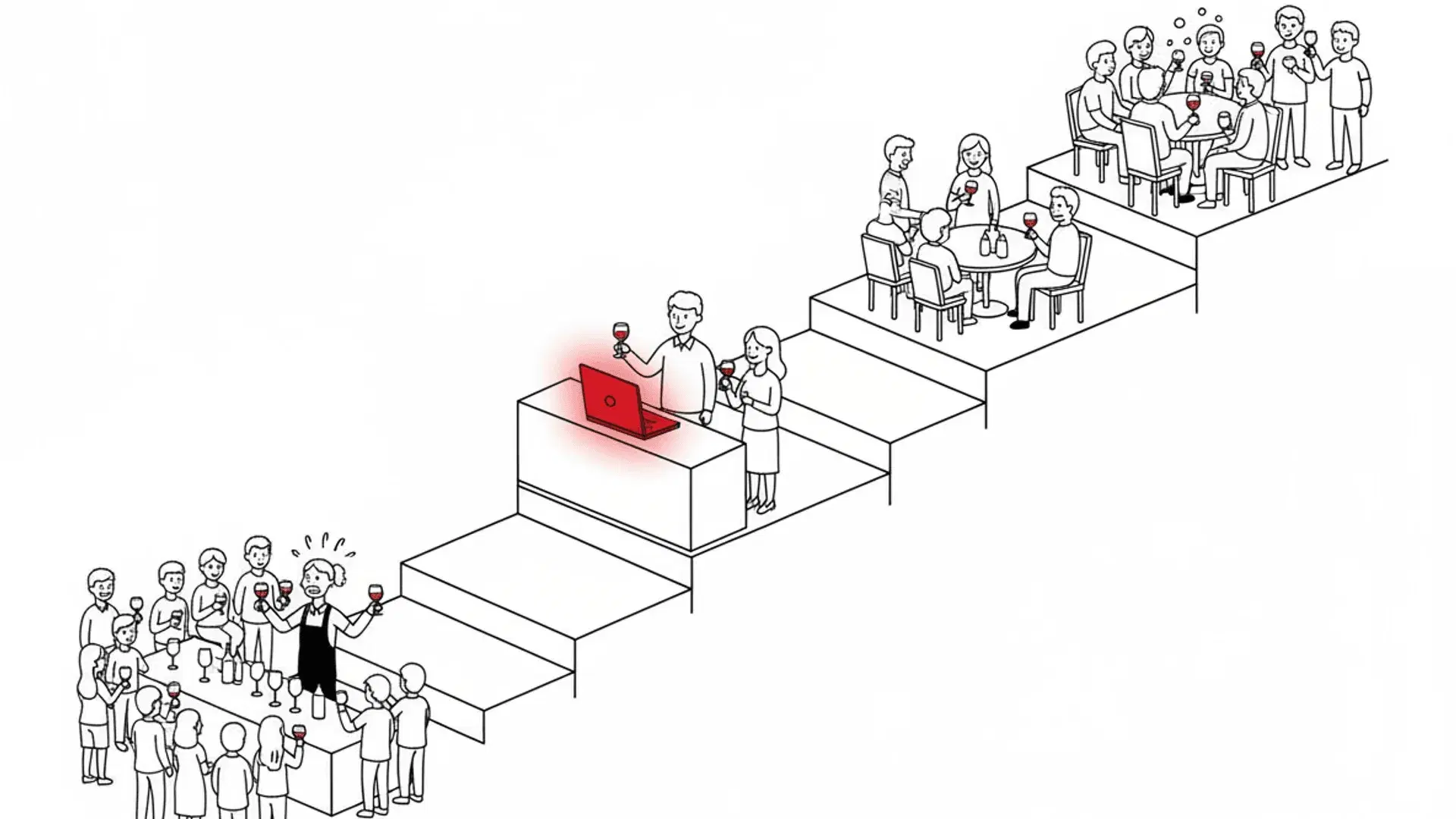
How AI Fills Every Seat Without Pulling Staff Off the Floor
The playbook above works. The problem is execution when your team is managing a tasting room full of guests. Here's how an AI Sales Assistant for wineries solves each piece.
The 9 PM booking request. A couple in Chicago is planning a Napa weekend. They email at 9:17 PM on a Wednesday. An AI responds by 9:18 PM with your tasting experiences, pricing, available times for their requested date, and a booking link. By morning, they've confirmed - before they even contacted the next winery on their list.
The Saturday afternoon rush. Three calls come in during your busiest tasting hour. The AI answers each one instantly, checks your availability in real-time, answers questions about your reserve experience and food pairing options, and books all three groups. Your staff never stops pouring.
The follow-up gap. Most tasting inquiries don't book on first contact. The AI runs follow-up automatically - Day 1, Day 3, Day 7 - with personalized messages. "Still planning your Willamette Valley trip? We have a few openings left for the 15th. Our estate Pinot is drinking beautifully right now." Research shows 6 follow-up attempts achieve a 93% contact rate. Most wineries make one.
The repetitive questions. "What time do you open?" "Do you take walk-ins?" "Is there a tasting fee?" "Are you dog-friendly?" "Can we bring food?" Your staff answers these 30+ times per day. An AI handles them instantly from your knowledge base, freeing your team to do what they do best: build relationships over a glass of wine.
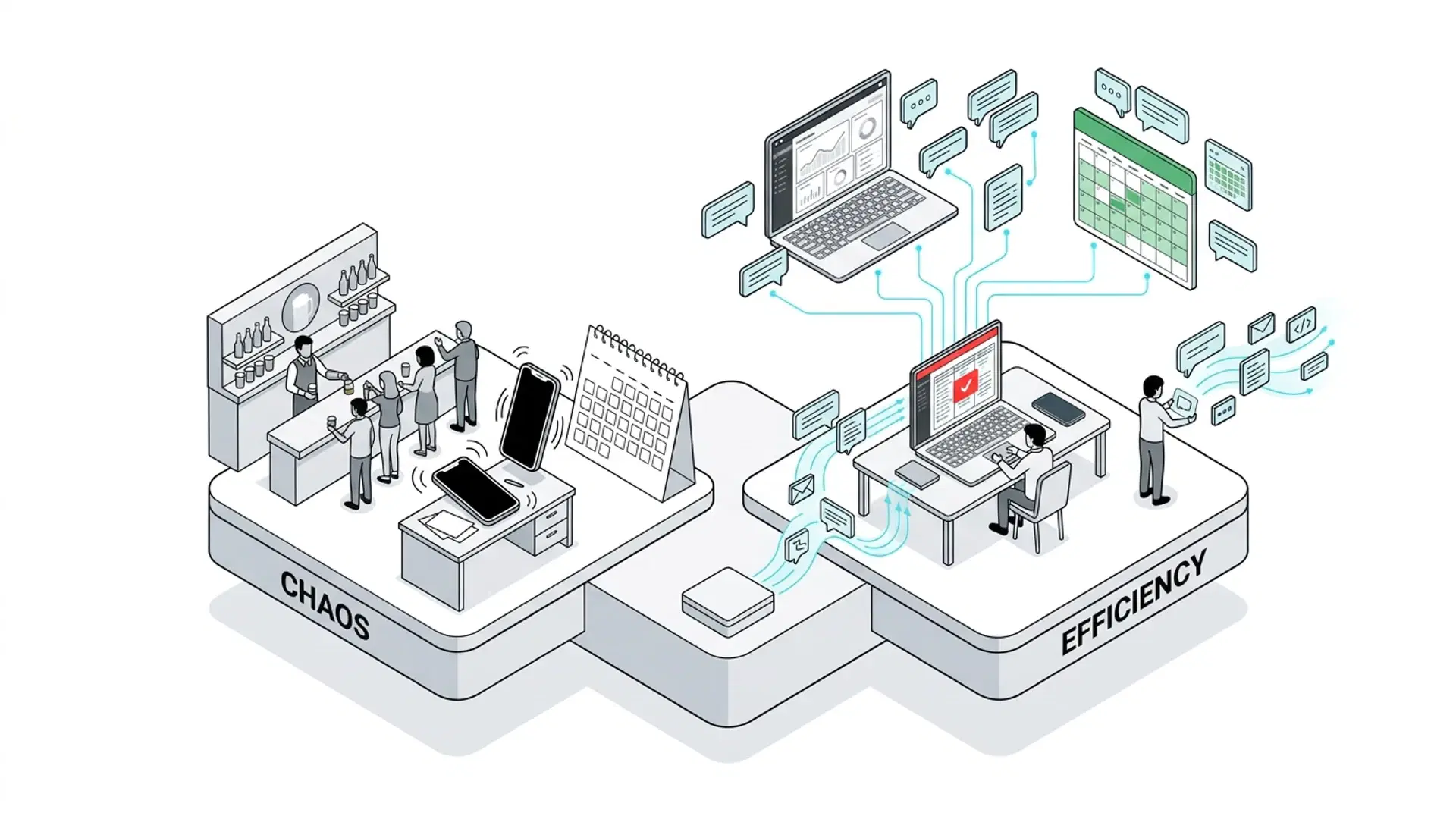
The channel chaos. Reservations come from your website, OpenTable, email, phone, Instagram DMs, and Google Business messages. The AI funnels everything into one dashboard. No more checking six platforms. No more leads slipping through cracks between your website and your phone.
Beyond Tastings: Revenue Most Wineries Leave on the Table
Tasting fees are your front door. But the real money comes through doors your team doesn't have bandwidth to open.
| Opportunity | Avg. Revenue | Typical Miss Rate |
|---|---|---|
| Private group tastings | $2,000 | 35% (voicemail during service) |
| Corporate events | $8,000 | 50% (slow response to planners) |
| Wine dinners | $5,000 | 40% (email buried in inbox) |
| Vineyard weddings | $15,000+ | 30% (inquiry lost across channels) |
| Wine club signups (via tasting) | $200/year per member | 25% (no post-tasting follow-up) |
A winery running 50,000 visitors per year that improves capture rates by even 10% across these categories adds $100,000+ in annual revenue - from leads that were already coming in.
The smartest wineries treat their tasting room as a funnel, not just a destination. Every visitor is a potential wine club member. Every wine club member is a potential private event host. Every private event is a referral engine for corporate bookings. But only if someone responds to the inquiry.
What Mikla actually does for wineries and tasting rooms
Mikla is an AI Sales Assistant (sometimes called an AI receptionist) built for venues and hospitality businesses. Here is what it handles for wineries and tasting rooms specifically:
- Every channel, one brain. Replies on email, SMS, voice calls, website chat, Instagram and Facebook DMs, WhatsApp, and marketplace lead forms (The Knot, WeddingWire, Hitched, Zola). Same memory across all of them, so a couple emailing Monday and texting Friday is treated as one conversation.
- Books directly on your calendar. Books, reschedules, and cancels appointments on Google Calendar or Outlook. Reads conflicts across your main calendar, Calendly, and any reserved sub-calendars before offering times. Handles in-person and virtual tours and generates Google Meet links automatically.
- Trained from your own documents. Upload your pricing sheets, contracts, and policies. Mikla trains itself in 2 to 5 minutes. Quick-edit the knowledge base in plain English ("change Friday hours to 6-11pm") with auto-rollback on failure. Refuses to fabricate pricing or capacity it does not know.
- Per-event-type configuration. Run weddings, corporate events, and private celebrations side by side, each with its own qualification questions, knowledge base, signature, follow-up cadence, and CTA. Add a new event type without writing code.
- Multi-stage follow-up automation. Email and SMS sequences across pre-tour, post-tour, and post-contract-sent stages. Auto-stops the moment a lead replies, books, or opts out. Detects natural opt-outs ("please stop"), not just STOP keywords. Respects quiet hours and your timezone.
- Built-in sales Kanban. Every lead moves through stages: new, qualified, tour booked, tour completed, contract sent, signed, lost. Conversations, qualification answers, calendar bookings, and follow-up history all live on the same lead. No separate CRM needed.
- Contracts and payments in the same flow. Once a booking is confirmed, Mikla fills your own contract template with the names, dates, and totals (your wording, never invented), sends it for built-in e-signature, and collects the deposit or payment schedule through Stripe. Signature and balance reminders run until it is signed and paid, then stop.
- 24/7 voice agent. Picks up calls in a natural human voice. Qualifies leads, answers questions, books tours, transfers to your team when appropriate. Full transcripts saved.
- Recognizes returning customers. Detects repeat inquirers and existing clients automatically. Marketplace leads parsed so couples are never re-asked for info they already filled in.
Frequently Asked Questions
Can AI really answer detailed questions about my wines? Yes. You upload your own materials - tasting notes, varietal details, winemaking processes, vineyard information, food pairing guides. The AI answers from your knowledge base exclusively. When you release a new vintage or update your tasting menu, change the knowledge base and responses adjust immediately.
What about the hospitality experience? Wine tasting is personal. The AI handles booking logistics - reservations, scheduling, availability, follow-up. Your team handles hospitality. Guests actually get a better experience because your tasting room staff isn't interrupted mid-pour to answer phone calls about hours and directions.
We're a small boutique winery with 15 visitors a day. Is this worth it? Smaller wineries benefit the most because the owner is the sales team. When you're in the barrel room or pouring for guests, every missed call is a direct revenue loss with zero backup. At $1,080+ per tasting group, even 2-3 additional bookings per month cover the cost many times over.
Our tasting room is seasonal. Do we need this year-round? Peak season (May-October) is when inquiry volume spikes and staff is stretched thin. But off-season is when next year's private events, wine dinners, and corporate bookings get planned. Year-round coverage captures revenue for both the current and next season.
Ready to see how Mikla handles your inquiries?
Book a 15-minute demo and we will connect Mikla to a test inbox of yours, upload your pricing sheet, and show you the AI replying to a sample inquiry in real time. No commitment, no card required.
Never miss another lead with Mikla's 24/7 AI sales agent.