Best AI Sales Assistant for Wedding Venues in 2026
We compared the 8 AI tools wedding venues actually use to handle leads in 2026, ranked by channel coverage, calendar booking, and marketplace lead handling.

Best AI Sales Assistant for Wedding Venues in 2026
A side-by-side comparison of the 8 tools wedding venues actually use to handle leads, book tours, and stop losing couples to slow replies.
TL;DR
- 8 tools claim to help wedding venues handle inbound leads. Only a few were built for the venue lead workflow specifically: multi-channel, marketplace-aware, and calendar-native.
- Mikla wins on channel coverage, calendar handling, and marketplace lead parsing. HoneyBook and Dubsado are CRMs with light AI, not full AI Sales Assistants. Smith.ai is strongest if you want live humans answering calls.
- DIY ChatGPT is the cheapest path, but it falls over on calendar logic and pricing accuracy.
- The right choice depends on which channels your couples use and how many event types you run.
What makes a great AI Sales Assistant for a wedding venue
An AI Sales Assistant for a wedding venue is software that handles the venue's inbound lead workflow without a human in the loop: capturing inquiries, qualifying couples, answering their questions, and booking tours on the venue's calendar. (Some vendors call this an AI receptionist. They refer to the same category.)
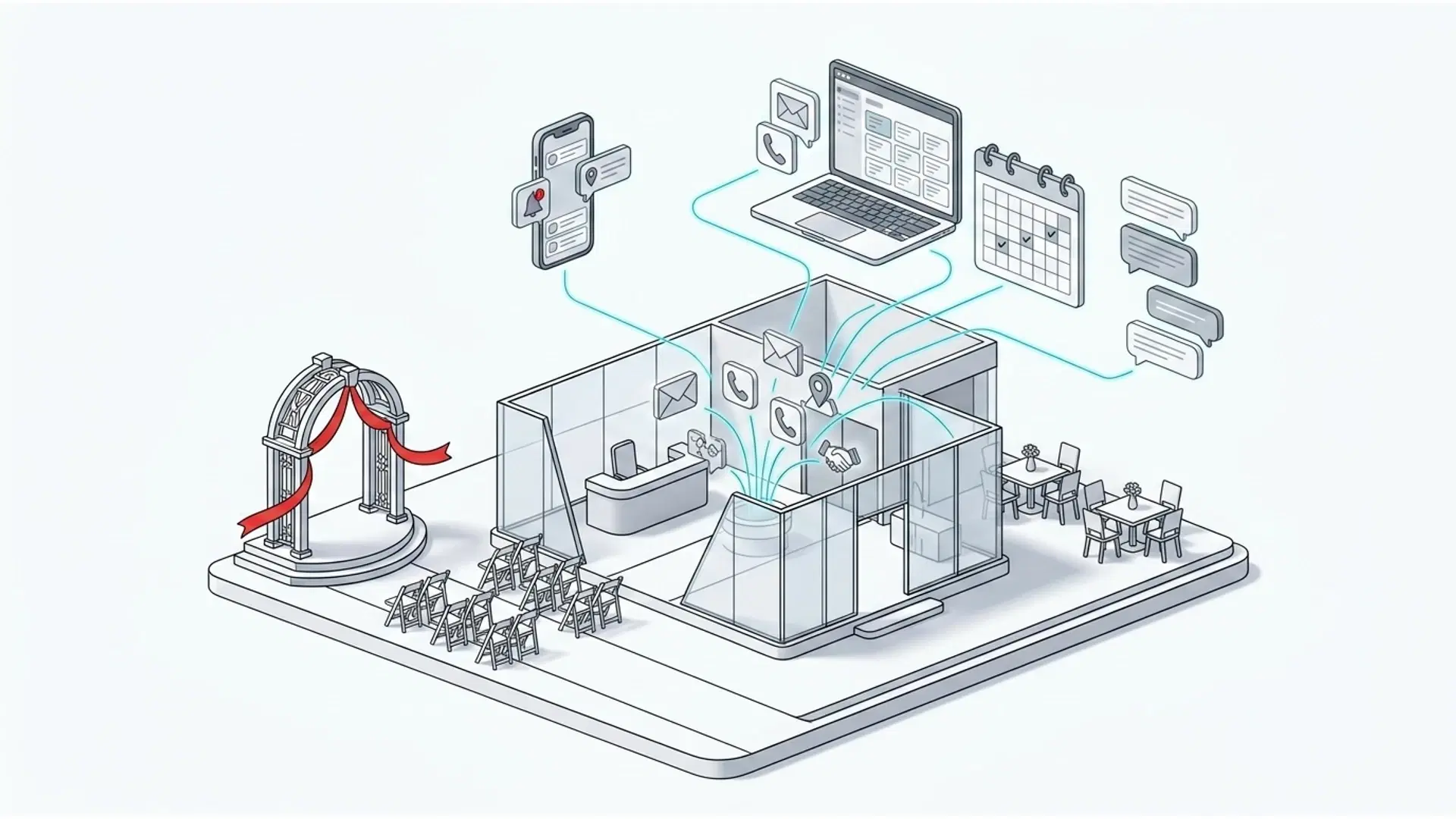
A great one covers the actual mess of a venue's inbox. Couples reach out through five or six channels in a single inquiry cycle: the website form on Tuesday, an email from The Knot on Wednesday, a phone call Thursday morning, a follow-up text Friday. The AI has to remember it's all one couple.
Here's the criteria we used to score each tool:
- Channel coverage. Email is the floor. Voice, SMS, website chat, Instagram and Facebook DMs, WhatsApp, and marketplace lead forms (The Knot, WeddingWire, Hitched, Zola) all matter.
- Calendar booking. Can the AI book directly on Google Calendar or Outlook, check multi-calendar conflicts, and respect business hours, buffers, and closed days?
- Marketplace lead parsing. Does it pull the couple's info from a marketplace inquiry instead of asking them all over again?
- Knowledge base from your documents. Can you upload your actual pricing PDFs and contracts, and does the AI refuse to fabricate answers it doesn't know?
- Per-event-type configuration. If your venue runs weddings and corporate events side by side, can you give each one its own qualification questions, KB, signature, and follow-up cadence?
- Follow-up automation across the full lifecycle. Pre-tour, post-tour, post-contract. Auto-stop on reply, opt-out, or booking.
- 24/7 response time. Most venue inquiries arrive outside business hours. If the AI clocks out at 5pm, you lose them.
- Pricing model. Per-venue subscription, per-message, or per-call. This decides whether the tool scales as you grow.
Now to the tools.
The 8 tools compared
| Tool | Channels covered | Voice agent | Calendar booking | Marketplace parsing | KB from docs | Per-event-type | Contracts & payments | Best for |
|---|---|---|---|---|---|---|---|---|
| Mikla | Email, SMS, voice, chat widget, Meta DMs, marketplaces | Yes | Google + Outlook, multi-calendar | Yes | Yes | Yes | Built-in (e-sign + Stripe) | Multi-channel venues |
| HoneyBook | No | Single calendar | No | No | Limited | Yes, manual | Solo operators | |
| Dubsado | No | Yes | No | No | Limited | Yes, manual | Workflow automation | |
| Aisle Planner | No | Yes | No | No | Limited | Limited | Planner collaboration | |
| Smith.ai | Voice, chat | Live humans | Yes | No | Light | No | No | Live phone coverage |
| Perfect Venue | No | Yes | Limited | Light | Yes | Yes, manual | Venue-specific CRM | |
| Generic chatbots (Intercom Fin, Drift) | Website chat | No | Limited | No | Partial | No | No | Generic SaaS, not venues |
| DIY ChatGPT build | What you build | No | What you build | What you build | Unreliable | What you build | No | The brave |
1. Mikla: best overall for wedding venues
Mikla is an AI Sales Assistant purpose-built for venues. It replies on every channel a couple uses (email, SMS, voice calls, website chat, Instagram and Facebook DMs, WhatsApp) from one AI brain that remembers the full conversation history. So if a couple emails Monday and texts Friday, Mikla treats it as one thread, not two cold starts.
Where it shines for wedding venues:
- Replies typically land in under a minute after a lead comes in, including at 2am
- Books tours directly on your calendar on Google Calendar or Outlook, reads multiple calendars at once (main, Calendly, reserved sub-calendars) to avoid double-bookings, and handles in-person, virtual, and Google Meet tours
- Parses leads from The Knot, WeddingWire, Hitched, and Zola so couples never get re-asked for info they already filled in
- Runs weddings, corporate events, and private celebrations side by side on the same venue, each with its own qualification questions, knowledge base, signature, follow-up cadence, and CTA
- Trained from your own PDFs, contracts, and pricing sheets, and refuses to fabricate pricing or capacity it doesn't know (it forwards unknowns to your team with full conversation context)
- Multi-stage follow-ups across pre-tour, post-tour, and post-contract-sent stages, with auto-stop on reply or booking, and natural opt-out detection ("please stop", not just STOP keywords)
- Once the booking is confirmed, fills your own contract template with the names, dates, and totals (your wording, never invented), sends it for built-in e-signature, and collects the deposit or payment schedule through Stripe, with reminders that run until it is signed and paid
Where it falls short:
- Higher ticket than a plain CRM. Right call for venues with steady inbound volume, possibly overkill for a venue closing fewer than five weddings a year.
- Not an event-operations platform. Mikla owns the sale from inquiry to signed contract and paid deposit; day-of timelines, BEOs, and seating charts still live in your planning tools.
Verdict: If your venue gets inquiries on more than two channels and you've ever lost a lead to a slow reply, this is the strongest option in the category.
2. HoneyBook: best for solo operators who mostly do contracts
HoneyBook is a client management platform for service businesses with some AI features layered in. It's strong for contracts, invoicing, and templated email replies.
Where it shines: contract workflows, invoice automation, and a clean client portal experience.
Where it falls short for venues: no voice agent, no SMS, no marketplace lead parsing, and no native knowledge base trained from your venue's documents. The AI assists with drafting replies but doesn't handle the full inbound workflow autonomously. If a couple calls your venue at 9pm, HoneyBook is not the tool answering.
Verdict: Great for solo wedding professionals (planners, photographers) who close most business through their own funnel. Underpowered for a multi-channel venue.
3. Dubsado: best for workflow automation if you reply manually
Dubsado is a project and workflow management tool with strong custom workflows, forms, and proposals.
Where it shines: trigger-based workflows that fire emails, tasks, and forms based on lead actions.
Where it falls short for venues: like HoneyBook, it's a CRM with automation, not an AI that talks to your couples. The AI does not pick up the phone, qualify the lead, or book the tour. You still write the replies.
Verdict: Solid back-office tool. If you want the AI to do the actual replying and booking, you need to add one on top.
4. Aisle Planner: best for planner-to-couple collaboration
Aisle Planner is built for the wedding industry specifically, with strong planner-side tools, vendor management, and couple-facing portals.
Where it shines: wedding-specific workflows, design and timeline tools, and couple-vendor collaboration after a booking is signed.
Where it falls short as an AI Sales Assistant: it's a workflow tool, not a lead response tool. It doesn't reply to inbound inquiries on your behalf, doesn't handle phone calls, and doesn't parse marketplace leads.
Verdict: A complement to an AI Sales Assistant, not a replacement.
5. Smith.ai: best for live human phone coverage
Smith.ai is a virtual receptionist service backed by real human agents with AI augmentation. They answer your phone, chat widget, and forward qualified leads to your team.
Where it shines: real humans on the phone, especially helpful for venues that get a lot of voice calls and want the warmest possible touch.
Where it falls short: pricing scales with call volume, which gets expensive at scale. They don't manage email inbox replies the way an AI Sales Assistant does, don't parse marketplace leads, and their knowledge of your venue depends on what you've trained their human agents on.
Verdict: Strong call-answering option, weaker on the email and marketplace side. Often used alongside another tool, not as the sole solution.
6. Perfect Venue: best for venues that want a CRM, not an AI
Perfect Venue is a CRM purpose-built for event venues, with strong booking management, BEOs (banquet event orders), and event coordination.
Where it shines: post-booking operations, BEO management, and a venue-specific data model.
Where it falls short: like the other CRMs on this list, it's not designed to autonomously reply to inbound leads. Lead capture and qualification happen inside the platform, but the AI-driven multi-channel response loop isn't its core.
Verdict: A great post-booking system. Pair it with an AI Sales Assistant for the pre-booking lead response work.
7. Generic AI chatbots (Intercom Fin, Drift, Tidio)
Generic AI chatbots sit on your website chat widget and answer visitor questions using a knowledge base you upload or a connection to your help docs.
Where they shine: SaaS support, software product questions, generic FAQ deflection.
Where they fall short for venues: they live in one channel (website chat) and weren't designed for the venue workflow. They don't book tours on Google Calendar, don't parse The Knot leads, don't handle voice, and often hallucinate pricing if you upload a complex venue PDF.
Verdict: Cheap and easy, wrong tool for the job. A venue that drops one of these on its site is solving a different problem than the one it has.
8. Building your own with ChatGPT
GPT-4 and Claude are powerful enough that some venue owners try to build their own AI Sales Assistant by piping inbound emails into a model and having it draft replies.
Where it shines: full control over prompts, and the raw API cost is low.
Where it falls short for venues:
- Calendar booking is hard. The model doesn't natively check Google Calendar conflicts. You have to build that, and bugs in the date logic cost you booked tours.
- Knowledge base accuracy is unreliable. A naive RAG setup will confidently quote the wrong pricing from your PDF.
- Voice, SMS, and Meta channels each need their own integration. A real venue gets hit on six channels. Building all of them is a six-month engineering project.
- No team workflow. No way to escalate to your team mid-conversation, no shared inbox, no per-event-type config.
Verdict: Tempting if you're technical and only have one channel. A real venue has six channels, multi-calendar conflicts, and a couple expecting an answer in seconds. DIY breaks at scale.
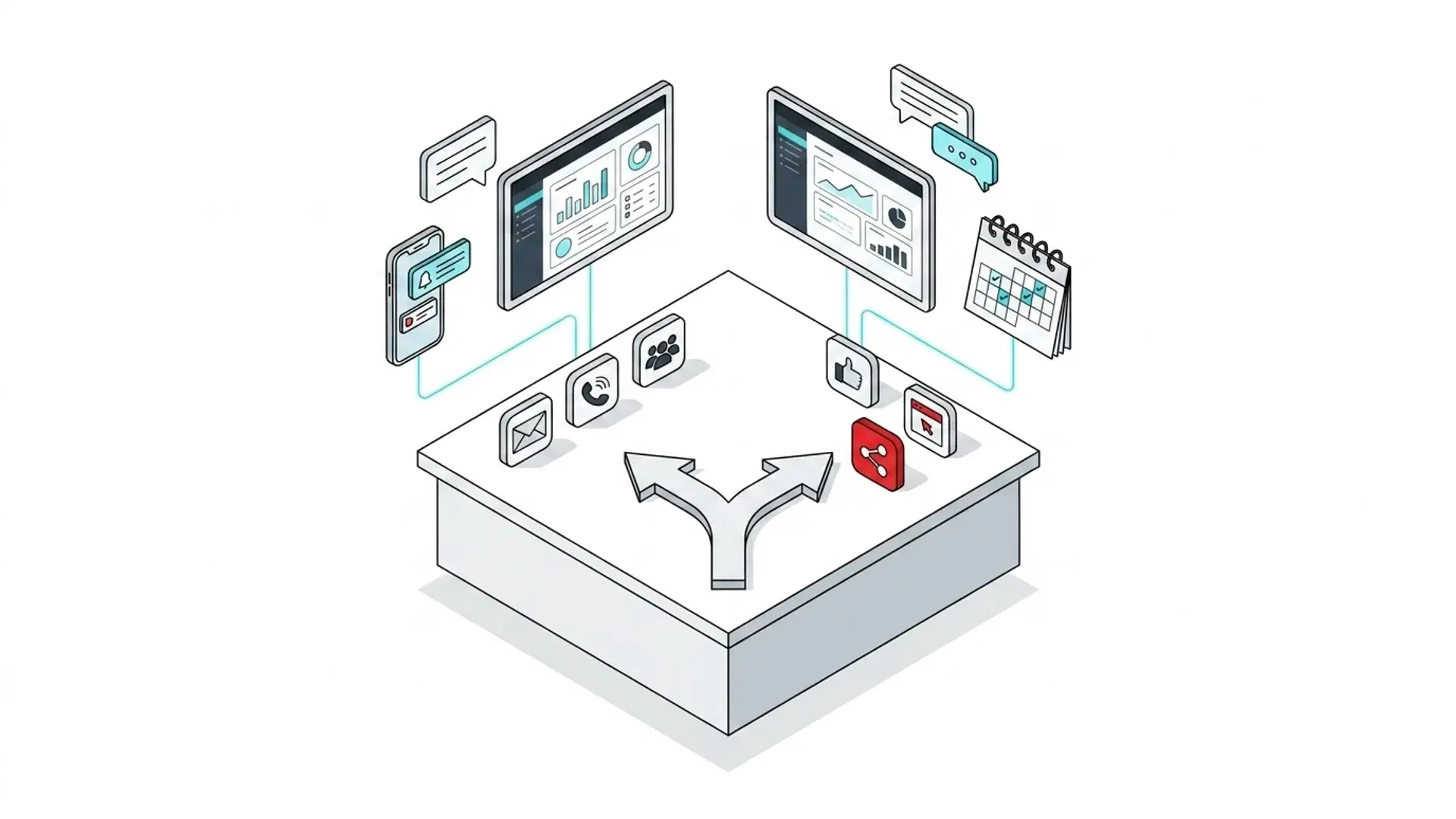
How to choose: a decision framework
- Choose Mikla if: you get inquiries on more than two channels, you run more than one event type, you get The Knot or WeddingWire leads, or you've ever lost a couple to a slow reply.
- Choose HoneyBook or Dubsado if: you're a solo operator who mostly handles contracts and invoices, and you reply to leads yourself.
- Choose Aisle Planner if: you're a wedding planner or wedding-only venue that needs strong post-booking collaboration tools.
- Choose Smith.ai if: the bulk of your inquiries are phone calls and you want real humans answering, with a budget that can absorb per-call pricing.
- Choose Perfect Venue if: your gap is on the post-booking operations side (BEOs, event coordination) rather than lead response.
- Choose generic chatbots if: you only need to deflect basic FAQs on a website chat widget.
- Choose DIY ChatGPT if: you're technical, you have one channel, and you can tolerate occasional hallucinated pricing.
What setup actually looks like
Most venue owners assume setting up an AI Sales Assistant is a multi-week project. With a venue-built tool it's closer to an hour, broken into four steps:
- Connect your inboxes and calendars. One-click OAuth for Gmail or Outlook. Pull in Google Calendar or Office 365 calendars, including any Calendly or reserved sub-calendars you want the AI to check before offering times.
- Upload your documents. Drag in your pricing sheets, package PDFs, FAQs, and contracts. The AI trains itself in 2 to 5 minutes and emails you when it's ready so you can leave the page.
- Configure per-event-type details. Qualification questions, signature, follow-up cadence, CTAs, and quiet hours. Each event type (weddings, corporate, private) configured independently, with smart inheritance so you only configure what's actually different.
- Run test mode before going live. Preview exactly what the AI would send to incoming inquiries, edit, and approve before the AI starts replying to real couples.
That's it. The tool is doing real work on the same day you set it up.
What Mikla actually does for wedding venues
Mikla is an AI Sales Assistant (sometimes called an AI receptionist) built for venues and hospitality businesses. Here is what it handles for wedding venues specifically:
- Every channel, one brain. Replies on email, SMS, voice calls, website chat, Instagram and Facebook DMs, WhatsApp, and marketplace lead forms (The Knot, WeddingWire, Hitched, Zola). Same memory across all of them, so a couple emailing Monday and texting Friday is treated as one conversation.
- Books directly on your calendar. Books, reschedules, and cancels appointments on Google Calendar or Outlook. Reads conflicts across your main calendar, Calendly, and any reserved sub-calendars before offering times. Handles in-person and virtual tours and generates Google Meet links automatically.
- Trained from your own documents. Upload your pricing sheets, contracts, and policies. Mikla trains itself in 2 to 5 minutes. Quick-edit the knowledge base in plain English ("change Friday hours to 6-11pm") with auto-rollback on failure. Refuses to fabricate pricing or capacity it does not know.
- Per-event-type configuration. Run weddings, corporate events, and private celebrations side by side, each with its own qualification questions, knowledge base, signature, follow-up cadence, and CTA. Add a new event type without writing code.
- Multi-stage follow-up automation. Email and SMS sequences across pre-tour, post-tour, and post-contract-sent stages. Auto-stops the moment a lead replies, books, or opts out. Detects natural opt-outs ("please stop"), not just STOP keywords. Respects quiet hours and your timezone.
- Built-in sales Kanban. Every lead moves through stages: new, qualified, tour booked, tour completed, contract sent, signed, lost. Conversations, qualification answers, calendar bookings, and follow-up history all live on the same lead. No separate CRM needed.
- Contracts and payments in the same flow. Once a booking is confirmed, Mikla fills your own contract template with the names, dates, and totals (your wording, never invented), sends it for built-in e-signature, and collects the deposit or payment schedule through Stripe. Signature and balance reminders run until it is signed and paid, then stop.
- 24/7 voice agent. Picks up calls in a natural human voice. Qualifies leads, answers questions, books tours, transfers to your team when appropriate. Full transcripts saved.
- Recognizes returning customers. Detects repeat inquirers and existing clients automatically. Marketplace leads parsed so couples are never re-asked for info they already filled in.
FAQ
What is an AI Sales Assistant for a wedding venue?
An AI Sales Assistant for a wedding venue is software that handles a venue's inbound lead workflow automatically by capturing inquiries from any channel, qualifying couples, answering their questions, booking tours on the venue's calendar, and following up across the full lifecycle. It replaces or augments the front-desk work of an inquiry coordinator. Some vendors call this an AI receptionist or AI lead response tool. They refer to the same category.
How much should a wedding venue pay for an AI Sales Assistant?
A wedding venue should expect to pay between $20 a month for a DIY ChatGPT build to roughly $300 a month and up for a venue-specific tool with voice, calendar, and multi-channel coverage. Mikla, for example, runs around $249 a month per venue for full multi-channel, calendar, voice, and follow-up coverage. If a single booked tour can recover the cost in one month, the math usually works.
Is an AI Sales Assistant the same as an AI receptionist?
An AI Sales Assistant and an AI receptionist refer to the same category of tool for most wedding venue use cases, but the positioning differs: AI receptionist emphasizes call answering, while AI Sales Assistant emphasizes the full lead-to-booked-tour workflow across email, SMS, chat, Meta DMs, marketplace leads, and voice calls. A modern tool like Mikla covers calls but also handles the multi-channel reality most venues face today.
Can AI book wedding venue tours on my calendar?
Yes, venue-specific AI Sales Assistants book wedding tours directly on Google Calendar or Outlook by reading multiple calendars at once (main, Calendly, reserved sub-calendars) to avoid conflicts, respecting your business hours and minimum-notice buffers, and generating Google Meet links for virtual tours. Mikla handles same-day and same-week confirmations correctly across year boundaries, a common failure mode in DIY builds.
Ready to see how Mikla handles your inquiries?
Book a 15-minute demo and we will connect Mikla to a test inbox of yours, upload your pricing sheet, and show you the AI replying to a sample inquiry in real time. No commitment, no card required.
Never miss another lead with Mikla's 24/7 AI sales agent.