What Is an AI Sales Assistant for Venues? (Complete Guide)
A plain-English guide to what an AI Sales Assistant does for venues, how it differs from your CRM, chatbot, or answering service, and how to tell if your venue is ready for one.

What Is an AI Sales Assistant for Venues? (Complete Guide)
A plain-English guide to the category: what an AI Sales Assistant does, how it differs from the tools you already pay for, and how to tell if your venue is ready for one.
TL;DR
- An AI Sales Assistant is software that replies to your venue's inquiries on every channel, qualifies each lead, answers questions from your own documents, books tours on your real calendar, and follows up until the lead replies, books, or opts out. It runs 24/7 without a human touching the inbox.
- It is not a CRM, a chatbot, or an answering service. Those tools store leads, deflect FAQ traffic, or take messages. An AI Sales Assistant carries the conversation from first inquiry to booked tour, and the best ones carry it all the way to signed contract and paid deposit.
- Speed is the whole point. Velocify's lead response research found that replying within one minute lifts lead conversion by 391%. The venue that answers first usually books the tour.
- "AI receptionist" is the older name for the same category. Same software, different label.
What is an AI Sales Assistant for venues?
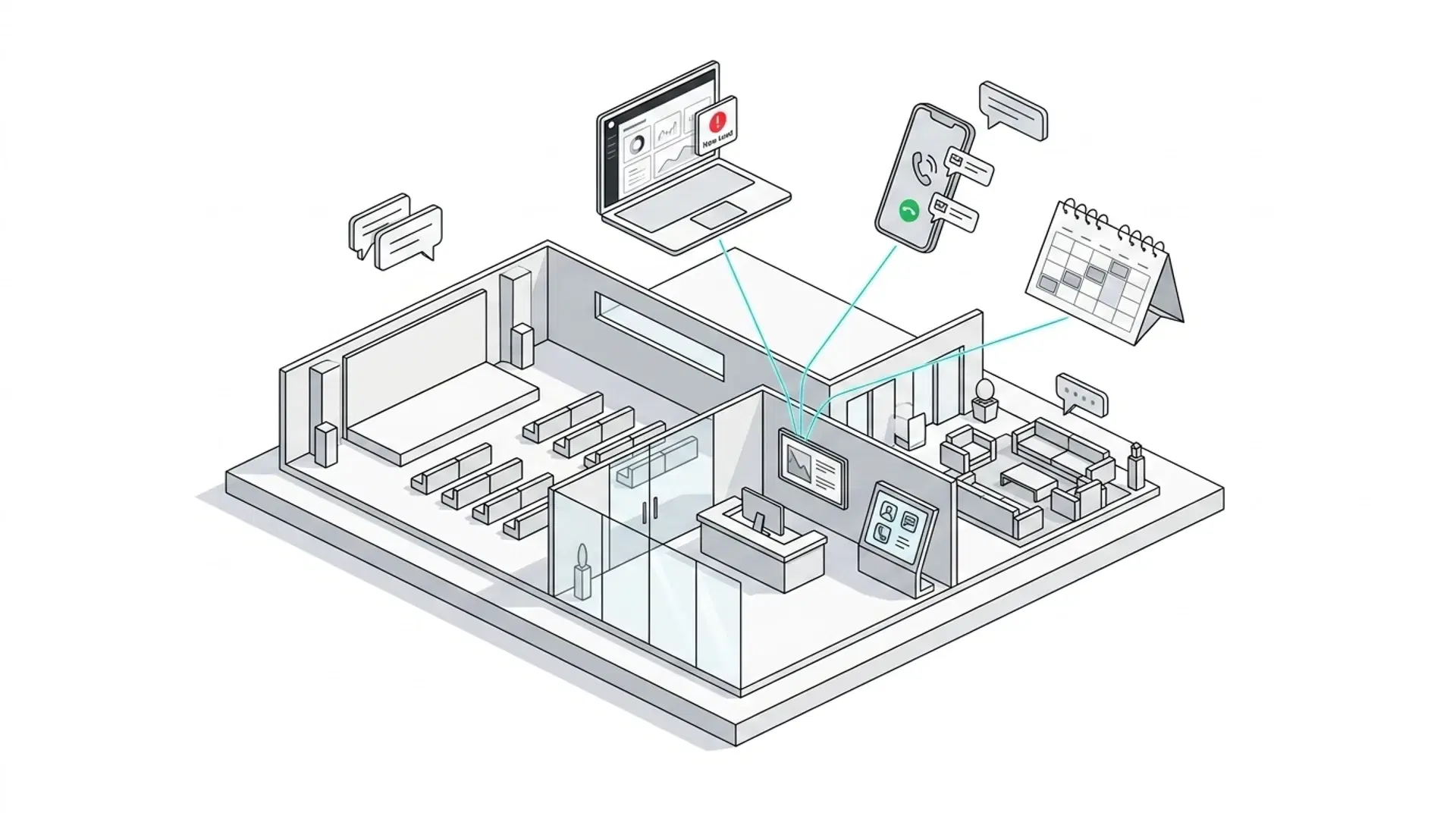
An AI Sales Assistant for venues is software that handles your inbound sales workflow on its own: it captures inquiries from every channel (email, phone, website forms, marketplaces, social DMs), qualifies each lead, answers questions from your own pricing and policy documents, books tours on your calendar, and follows up until the lead responds. Your team steps in for the tour and the tasting. The software handles everything around it, through to the contract filled from your own template, signed with built-in e-signature, and the deposit collected through Stripe.
Some vendors call this an AI receptionist. Both names describe the same category, but "receptionist" undersells the job. A receptionist answers and takes a message. A sales assistant answers, qualifies the lead, quotes from your packages, offers three tour slots, sends the calendar invite, and nudges the couple who went quiet on Thursday.
The category exists because venue inquiries and venue staffing are mismatched. Couples inquire late at night and on weekends. Corporate planners email five venues at once and book with whoever replies first. Meanwhile your team is running Saturday's event, not watching the inbox. A Harvard Business Review study of 2,241 companies found 23% never responded to their leads at all, and among those that did, the average response took 42 hours. For a business selling five-figure bookings, that gap is where revenue leaks.
The seven jobs an AI Sales Assistant does
A real AI Sales Assistant does seven jobs. If a tool does fewer than these, it belongs in a different category (more on that below).
- Answers every inquiry in under a minute, 24/7. Email, phone calls, SMS, website chat, Instagram and Facebook DMs, WhatsApp, and marketplace leads from The Knot, WeddingWire, Hitched, and Zola. Nights, weekends, and mid-event included.
- Qualifies every lead. It collects the answers you need (event type, date, guest count, budget) in your phrasing, and it never re-asks for information the lead already gave on a marketplace form.
- Answers from your own documents. Pricing sheets, packages, vendor policies, capacity charts. A trustworthy tool refuses to invent an answer it does not have, because a made-up minimum costs you the booking or the margin.
- Books tours on your real calendar. Not a scheduling link in an email. It reads your calendars, respects business hours and notice buffers, offers open slots, books the tour, sends the invite, and handles reschedules.
- Follows up until there's an answer. The median company makes exactly one follow-up attempt, while persistence research shows six attempts can reach a 93% contact rate. An AI Sales Assistant runs multi-step email and SMS sequences and stops the moment the lead replies, books, or opts out.
- Carries the deal to signed and paid. A built-in sales pipeline tracks every lead from new inquiry through tour, contract sent, and signed. When the booking is confirmed, the assistant fills your own contract template with the names, dates, and totals, sends it for built-in e-signature, and collects the deposit through Stripe, with reminders that run until it is done.
- Hands off to your team at the right moment. When a lead gets hot, asks something out of scope, or accepts a booking link, a human gets notified with the full conversation, not a cold transfer.
How it differs from the tools you already pay for
Most venues already pay for software that touches leads. None of it does the six jobs above. Here's the honest comparison:
| Venue CRM / event management | Live answering service | Generic website chatbot | AI Sales Assistant | |
|---|---|---|---|---|
| Examples | HoneyBook, Tripleseat, Perfect Venue | Smith.ai, Ruby | Off-the-shelf chat widgets | Mikla |
| Replies to inquiries on its own | No. Stores and organizes leads for you to answer | Phone only, from a script | Website only, scripted flows | Yes, across email, phone, SMS, chat, DMs, and marketplaces |
| Knows your pricing and policies | Only as files you store | No. Takes a message | Only what you hard-code | Yes, trained from your own documents |
| Books on your real calendar | Some send scheduling links | No | Rarely, with no conflict checks | Yes, with live availability checks |
| Follows up automatically | Templates you trigger manually | No | No | Yes, email + SMS until reply or opt-out |
| Handles contracts and deposits | Yes, but your team does the work in the tool | No | No | Yes, your template filled in, built-in e-signature, deposit via Stripe |
| Best for | Managing booked events and operations | Callers who want a live human voice | Deflecting simple FAQ traffic | Converting inquiries into toured, booked, signed events |
The takeaway isn't "replace everything." Most venues keep their event-management software for what happens after the contract and put an AI Sales Assistant in front of it, so every lead that reaches the CRM has already been answered, qualified, and toured.
What a week with one looks like
Category definitions are abstract. Here's what the software does in practice, using Mikla as the example.
Friday, 11:42pm. A couple submits a The Knot inquiry for a September date. Mikla parses the marketplace form, notices the guest count is already in it, replies in under a minute with answers from your wedding packages, and offers three tour slots for next week.
Saturday, 3pm, mid-event. The phone rings while your coordinator is cueing a first dance. Mikla's voice agent picks up, answers questions about your corporate packages in a natural human voice, books a site visit, and saves the full transcript.
Sunday morning. A planner DMs your Instagram about a 120-person retreat. Same AI brain, same memory. When she switches to email on Monday, the conversation continues instead of starting over.
Tuesday. The September couple has gone quiet. Follow-up #2 goes out, referencing the terrace they asked about, not a generic template. It will stop the moment they reply or opt out, and it will never send at 2am.
Wednesday. Someone asks a question the AI can't answer from your uploaded documents. Instead of guessing, Mikla forwards it to you with context. You answer once in the portal, and the AI knows it forever.
Thursday. The couple from two weeks ago tours at 5pm and says yes. You drop two lines of notes into the lead ("loved the terrace, nervous about parking"). Mikla writes the recap email in your voice, then fills your contract template with their names, dates, and totals, sends it for built-in e-signature, and collects the deposit through Stripe.
Notice what your team did in that week: a tour, a tasting, two lines of notes, and one portal answer. The inbox ran itself.
Does your venue need one?
You likely need an AI Sales Assistant if three or more of these are true:
- Inquiries arrive on three or more channels (email, phone, forms, marketplaces, DMs)
- Your after-hours and weekend response time is measured in hours, not minutes
- You pay The Knot or WeddingWire for leads that don't convert to tours
- One person owns the inbox, and bookings stall when they're off
- Your follow-up depends on someone remembering to send it
You probably don't need one if you get a handful of inquiries a month and already answer them within minutes, or if your real problem is traffic rather than response. An AI Sales Assistant converts demand you already have. It doesn't create demand you don't.
The math is worth running once: InsideSales.com's lead response study found the odds of qualifying a lead are 21 times higher when you respond within five minutes versus thirty. If your venue books $15,000 weddings and slow replies cost you even one booking a month, the category pays for itself many times over.
How to choose one
Evaluate any tool in this category on seven criteria: channel coverage (including voice), booking on your real calendar, answers trained from your documents, per-event-type configuration, automatic follow-up, a pipeline that carries the deal through contract and deposit, and honest escalation to your team. Pricing models vary, but venue-grade tools price per business, not per call or message.
We've published detailed comparisons against named alternatives for each venue type:
- Best AI Sales Assistant for Wedding Venues 2026
- Best AI Sales Assistant for Hotels 2026
- Best AI Sales Assistant for Wineries 2026
- Best AI Sales Assistant for Breweries & Distilleries 2026
- Best AI Sales Assistant for Golf & Country Clubs 2026
- Best AI Sales Assistant for Restaurants (Private Events) 2026
FAQ
What's the difference between an AI Sales Assistant and an AI receptionist?
They're two names for the same software category, and "AI receptionist" is the older label. The difference is emphasis: a receptionist answers and takes messages, while an AI Sales Assistant owns the full pre-sale workflow of answering, qualifying, quoting from your documents, booking tours on your calendar, and following up until the lead converts or opts out.
Will an AI Sales Assistant replace my sales team?
No. It replaces the part of the job nobody can staff: instant response on every channel at every hour, qualification, scheduling, and follow-up discipline. Your team still runs tours, tastings, and negotiations. Mikla hands hot leads to your team with the full conversation attached, so humans enter exactly when a human closes the deal.
How does setup work?
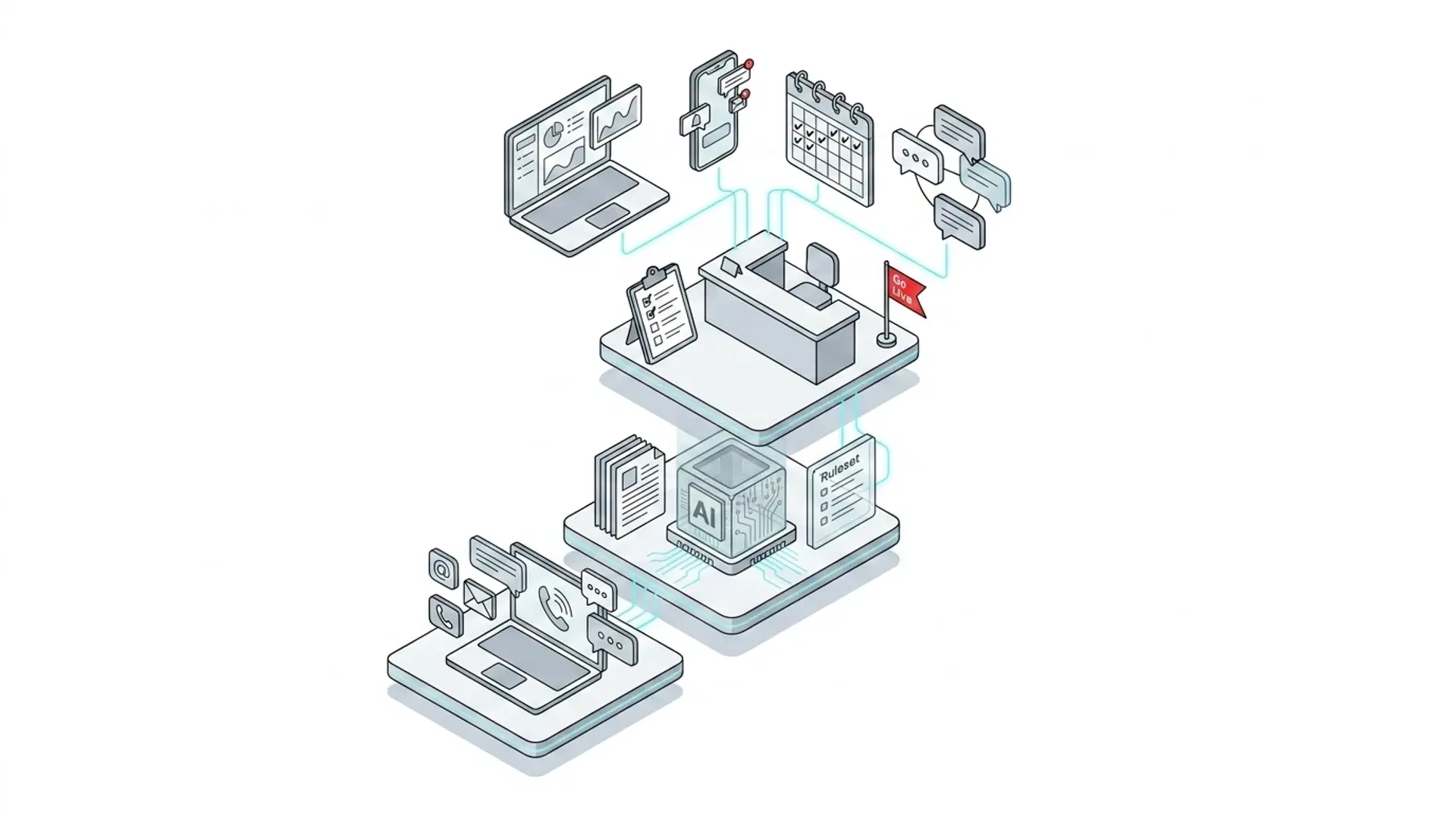
You connect your Gmail or Outlook with one click, upload your pricing and policy documents, and the AI trains itself from them. A test mode shows you exactly what it would send before it goes live, so nothing reaches a customer until you've approved it.
How accurate are the answers it gives couples and planners?
A venue-grade AI Sales Assistant only answers from documents you upload, and it should refuse to guess. Mikla flags every question it can't answer and routes it to your portal instead of inventing pricing or policies. You answer once, the AI remembers it forever, and you can edit the knowledge base in plain English at any time.
See what it would do with your venue's inquiries
The fastest way to understand the category is to watch it answer your own leads. Start free to try it on your own leads, or book a demo and we'll connect Mikla to a test inbox, upload your packages, and show you the AI qualifying, answering, and booking in real time. No commitment, no card required.
Never miss another lead with Mikla's 24/7 AI sales agent.
14 days of Core. No card.